
Diferencia entre el Oud sirio y los demás
Podemos decir que el origen del oud se remonta a tiempos antiguos, que ha sido pasado de generación en generación y sigue existiendo. oud tipos El tipo más común de oud es el oud árabe. Cuando se menciona el oud árabe, África del Norte, Palestina, Líbano, Jordania, Siria, Irak, Península Arábiga e Irán, el tipo de oud que consideraremos es el oud sirio. Syrian oud tiene la característica de producir un montón de tonos. Podemos decir que esta es la característica principal que lo hace diferente de los otros.
Antes de comprar un oud, usted necesita para investigar todas sus características y comprar el oud ideal para usted. Cada oud es diferente uno del otro. Los criterios que hacen los tipos de oud diferente uno del otro son los siguientes:
- Forma
- Medida
- Trabajo
- Material
- Peso
- Durabilidad
- Audio
- Teclado
- Saldo de alambre
Acerca de Oud

Las raíces del oud datan de hace 3500 años. El oud utilizado en Turquía no es estructuralmente diferente de los ouds en otros países, pero los cuerpos de ouds árabes son generalmente más grandes y tienen un gran agujero en lugar de dos pequeños y un gran agujero. El oud ha preservado su estructura durante unos mil años, excepto por algunos cambios.
Oud, un instrumento infrecuente; está en la sección de instrumentos de cuerda, por lo que la gama de sonido de este instrumento musical es de 3 octavas. El hermoso sonido del oud es proporcionado por su cuerpo hueco, que vibra a medida que suprime las cuerdas. Un plectrum se utiliza para tocar el oud. Tanto los tipos fuertes y más duraderos de madera como caoba y cuerno son preferidos en hacer el oud.
Puede estar interesado: ¿Cómo aprender Oud eficazmente?
¿Qué es el Oud sirio?

Cuando se menciona el oud, su origen inmediato viene a la mente. El oud sirio es considerado en la categoría árabe oud y es uno de los tipos más significativos. El oud sirio es considerado un instrumento promedio. Es una opción bastante grande para comprar. El mayor fabricante de oud en el mundo sirio y el mundo árabe, en general, es 'Eso's.
¿Cuáles son los otros tipos de Oud?
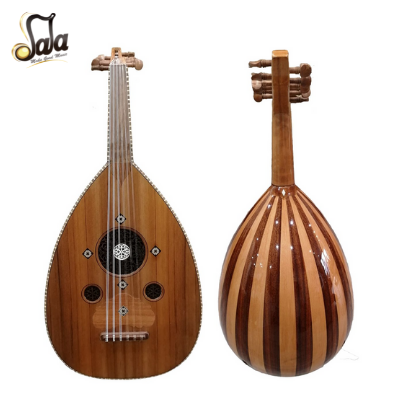
Hay dos tipos de oud en la norma. La primera es árabe, y la segunda es el oud turco. El oud árabe se divide en ramas dentro de sí mismo. Los ouds árabe y turco tienen características específicas. Los tipos más conocidos de oud son:
Turkish OudEl sonido del oud turco es suave. El oud turco está diseñado con un fuerte movimiento de dos o tres milímetros. En este diseño, ofrece una comodidad de juego distinta a la persona.
Árabe Oud
La tabla sonora de ouds árabes, que son generalmente 11 strung, es más gruesa que los Ouds turcos.
Syrian Oud
El oud sirio combina sonidos turcos y árabes. El sonido del oud sirio tiene un tono bastante duro y seco. Es de tamaño mediano.
Egipto Oud
El sonido del oud egipcio es pesado y grueso. El oud egipcio es el más grande entre las otras especies. El oud egipcio está hecho de abeto.
Marruecos Oud
Es un tipo raro de oud.
Persa Oud
Los Ouds árabes son grandes, los Ouds turcos son pequeños, y los Ouds persas son de tamaño mediano. Tiene una voz cálida y fluida.
Electric Oud
Ouds eléctricos diseñados en múltiples formas tienen un cuerpo sólido.
¿Cuál es la diferencia entre el oud sirio y los otros?
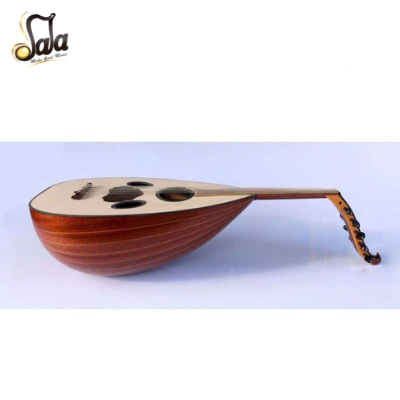
Considerando que hay criterios que distinguen los ouds entre sí, podemos ver fácilmente que el oud sirio es más alto que otros ouds. Además, el campo del oud sirio es más bajo. Cuando lo examinamos como un cuerpo, se ve más pera que los tipos de oud. Los ouds egipcios son altamente ornamentales de otras especies. Cuando lo consideramos como un sonido, es más caro que otros ouds.
Como Sala Muzik, queremos proporcionarle el mejor servicio. Hemos recopilado todos los productos para usted en nuestra página. Siganos para más información y productos.
Puede estar interesado: Historia de Oud


Good Afternoon Mr. Moran,
Thank you for reaching out with your inquiry about finding the perfect oud. It’s great to hear about your interest in exploring different styles beyond your Turkish oud.
Regarding the choice between Syrian, Iraqi, and Persian ouds, each has its unique qualities in terms of tone, timbre, and resonance. Typically, Syrian ouds are known for their warm, rich sound with excellent volume, making them very resonant. Persian ouds often exhibit a bright and clear tone, suitable for intricate melodic lines. Iraqi ouds, distinct for their floating bridges, offer a dynamic range of sound and allow for subtle tonal adjustments, which can enhance the instrument’s expressiveness. The floating bridge, indeed, adds a unique character by providing more vibration freedom, thus enriching the sustain and clarity of each note.
With a budget of £800, you are indeed in a good position to acquire a high-quality, professionally set up oud. The instrument I recommend, the Premium Arabic Oud Sala A9, falls within your budget and meets the criteria you described. It is hand-assembled and carefully checked to ensure a beautiful setup and sound. You can view and consider this model here: Premium Arabic Oud Sala A9.
https://salamuzik.com/products/premium-arabic-oud-sala-a9
As for the wood choices, each type offers different attributes:
Walnut: Known for its balanced tone, provides a warm yet bright sound.
Apricot: Rarely used but offers a lighter, very resonant tone.
Pamela: This wood is not commonly used in oud construction; perhaps you meant Padauk, which offers a rich and warm sound.
Cocobolo: Delivers deep and powerful tones with excellent sustain.
Purpleheart: Known for its density and stiffness, provides a vibrant and resonant sound.
For the soundboard, AAA cedar is an excellent choice known for its warm and clear sound, enhancing the oud’s overall tonality. An ebony fretboard and pegs not only add aesthetic value but also contribute to the clarity of the sound, thanks to ebony’s dense nature.
Please let me know if you need any more details or if there’s anything else I can assist you with. I’m here to help ensure you find an instrument that meets your artistic needs and inspires your music.
Kind regards
info@salamuzik.com
Good Afternoon, I wonder if you are able to help?
I am looking to buy an Arabic oud, and am thinking of getting either a Syrian, an Iraqi, or a Persian oud. Which would you say has the better range in tone, timbre, and sounds, and which has the most resonance and volume? (I already have a Turkish oud).
Also, does the Persian oud always have a floating bridge, and if so, is this a good thing improving the instrument? How does this affect the sound in contrast to a fixed bridge?
I am looking for a powerful Arabic sounding instrument, with lovely clear tonal ranges with sustain.
My budget is £800 UK sterling (US$950). Will I find a high quality hand assembled, beautifully set up and checked, professional instrument for this price? What are my options?
Lastly, I have also been looking at woods. Ideally I would like an ebony fretboard and pegs. For the sound board I am considering AAA cedar.
For the body I am unsure. What are your opinions of, and how would you describe the character of the following possibilities: Walnut; Apricot; Pamela; Cocobolo; Purpleheart woods?
Any advice would be very much appreciated.
Thank you.
Kind regards,
David Moran (UK)
The Strings are Nylon like a Classical Guitar so the tension will be fairly low. I find that Machine Head tuners are more practical than friction pegs cause w/ that many strings to keep in tune, Machine heads make a big difference. A built in tuner on an Oud also rocks because Nylon strings take a while to stretch, so it helps w/ tuning it to pitch.
I would like to add that the Moroccan ouds, besides the fact of being rare, are the direct descendant of the Andalusian oud developed by Ziryab starting from Oud Ramal, which could only be found in Andalusia (Spain) and northern Morocco.
The development of the modern Moroccan Oud through the centuries borrowed innovative wood working techniques from Italy, Greece, Germany and, of course, Turkey, Egypt, Syria, Iraq, and most of the middle-east. And in return new Oud architectures were exported to serve as a basis for other modern incarnations in the Oud playing countries.
The main characteristics of modern Moroccan Ouds can be summarized as follows:
- Tone versatility. The Moroccan Oud makers mastered the equalization techniques using innovative approaches to the structure.
- High power. The typical Moroccan Oud is a few decibels louder than its oroental counterparts.
- Higher basses without being “muddy”
- Excellent playability
- Wide choice of woods that the makers know how to handle
- Easy access to the best of the best of Moroccan walnut for the bowl, which is by far the most sought after material by professional recording artists.
- Tested and adopted by a wide range of famous artists, such as Said Chraibi, Farid Al Artrash, Mohamad Abd El Wahab, Tantawi, and many other professional artists and collectors.
I would like to see more Ouds from Morocco at Sala Muzik so our brothers and cousins around the world can enjoy this unique 10 centuries craftsmanship.
Dejar un comentario